Greentopia 2025
“Fixing the food system is the smartest economic play we can make”
.png)
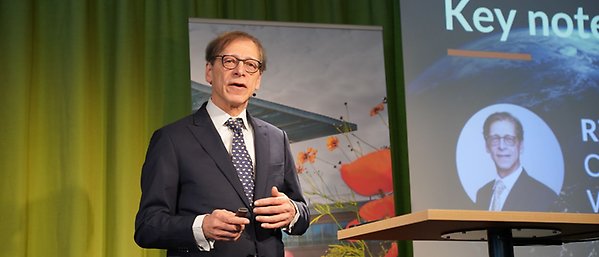
EAT co-founder Gunhild Stordalen at Greentopia. Photo by Jeanette Andersson.
Festivals can help repair broken food systems. A Swedish rock band transformed into a food truck is leading the way.
This year’s edition of “Greentopia”, held at the Way Out West music festival, focused on how food, music and events can help us to stay within planetary boundaries.
Co-hosted by Gothenburg City, LiveGreen and Stockholm Resilience Centre, the climate summit Greentopia brought together scientists, business leaders, artists, and changemakers to explore how live events – from music festivals to global summits – can accelerate the transition to a food system that operates within the planet’s limits.
Deputy Science Director, Per Olsson and LiveGreen founder Louise Lindén opened the festival by underlining the joy and importance of bringing together diverse actors to create change.
As an appetizer for the upcoming launch of the EAT Lancet Commission 2.0 in October, Centre Director Line Gordon and EAT co-founder Gunhild Stordalen pointed out that today’s food systems are a major driver of breaching all nine planetary boundaries.
Major policy reforms, better business incentives, and shifting consumer behavior are key to fix this. A shift to more regenerative agriculture, new diets and reducing waste is crucial.
“Fixing food is the smartest economic play we can make, it could generate benefits worth 10 trillion dollars per year,” Gunhild Stordalen said.
Music festivals may seem an unlikely place to start, but as Way Out West showed by going fully vegetarian in 2012, events can set powerful new norms. Line Gordon closed by outlining a list of three actions for the event sector:
“We need to set new norms – make sustainable food the default choice. Collaborate – forge new partnerships for greater impact. And we need to raise the voice of food systems – put food at the centre of climate conversations.”
Trucking change
Data alone doesn’t change behaviours, as Icelandic author Andri Snær Magnason put it.
“People don’t understand data – they understand stories.”
In a time of paradigm shifts, our language must inspire and connect. Humour also plays a role. Talking with rethorics researcher Maria Wolrath Söderberg, Martin Kann, rock band Bob Hund creative director, said:
“Transformation doesn’t work well if we take ourselves too seriously. We need both humour and seriousness to break through – enough concern to act, but not so much fear that people shut down.”
One fresh example of that is the food truck he and band members of Bob Hund launched during the festival. It was co-developed with LiveGreen, Axfoundation, PLATE and inspired by research done at Stockholm Resilience Centre. Read separate article hear.

Isabelle McAllister, Maria Wolrath Söderberg and Martin Kann at Greentopia. Photo by Jeanette Andersson.
Chefs are becoming climate leaders
Swedish “Chef of the Year” Jessie Sommarström collaborated with Swedish furniture giant IKEA to serve a more sustainable Swedish meatball – 50% meat, 50% plant-based.
Food entrepreneur Gustav Johansson summed it up simply: “We need to normalise sustainable food.”
A new feature this year was the Greentopia train – hosted by Swedish railways SJ and Stockholm Resilience Centre – a mobile climate meeting co-moderated by Centre comms director Marcus Lundstedt and with contributions from centre researcher and comms advisor Fredrik Moberg.
One of the speakers, food entrepreneur Rune Kalf Hansen, summed the conversations up by saying:
“We need to be braver and adopt a ‘just do it’ attitude. Transformations are easy, we just have to make them”.
The conversation continues at the Stockholm Food Forum, 3–4 October, where food system leaders will explore how to scale the solutions that are already working.