Social-Ecological Resilience for Sustainable Development
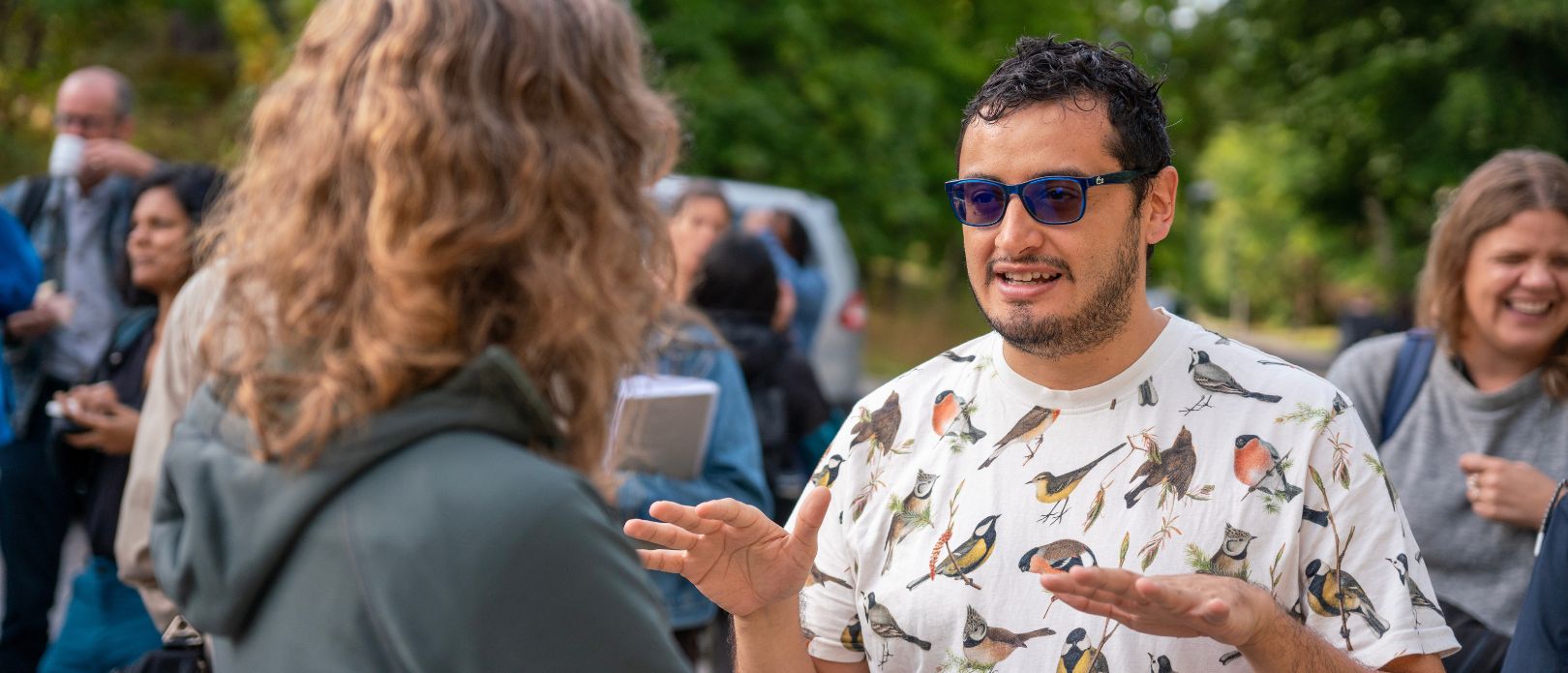
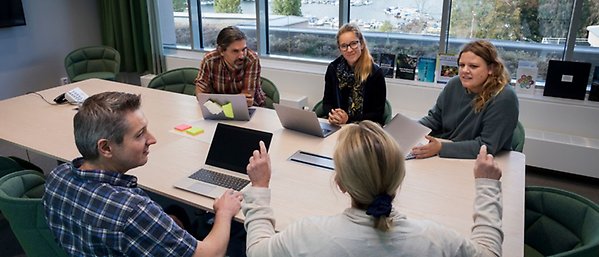
Our programme attracts top international students keen to develop a science-based approach to solving real-world problems. Photo: Johannes Ernstberger.
Our 2-year Master’s programme in Social-Ecological Resilience for Sustainable Development will introduce you to the complexity of interactions between humans and nature. The programme starts in the autumn term.
This is a research-focused programme where you will learn how to use resilience thinking as an approach to understanding and managing social-ecological systems, contribute to the research in this field, and address real-world problems. You do this in an international and highly interactive learning environment.
The programme is a 2-year full-time study. In the first year, you will attend four mandatory courses that provide broad training in concepts, theories and methods for studying the complexities of social-ecological systems. In the second year, you will develop and conduct your own research. This research will form the basis of your Master’s thesis which will relate to one or more of the research themes at Stockholm Resilience Centre and usually complements ongoing research. Our ambition is that your research will be publishable in peer-reviewed journals.
The programme is hosted by the Department of Biology Education (BIG) at Stockholm University.
Eligibility & Application
The SERSD programme attracts top international students. In order to ensure a high quality experience, spaces are limited to 18 students per year. We aim to achieve a student group with diverse backgrounds, because this creates the best environment for learning about sustainability. Applications require a Bachelor's Degree, or the equivalent, from an accredited university and a very good command of English that may require certification. Please see this page for detailed information regarding English Proficiency tests and requirements.
One of the application requirements is your response to a series of questions regarding your reasons for applying to SERSD and your research ideas and interests. We are looking to understand your motivation to attend this specific Master’s programme, to ensure we can meet your expectations and you can formulate a research question that fits within the programme’s field of study and at least one of the Centre's research themes and streams. This can include identifying a project(s) and/or researcher(s) at the Centre that you would like to work with. You can find the template for the motivation letter and research ideas on the Stockholm University programme page under "How to apply". Please make sure to follow the instructions in the template carefully. It is important that this is written in English!
For complete eligibility criteria and application procedures please check here.
Applications will be screened for meeting the requirements then reviewed and ranked in March at the Stockholm Resilience Centre. Decisions will be communicated in April via BIG.
Please click here for information about fees and scholarships.
For information on residence permit, please contact www.migrationsverket.se
Career prospects
The programme serves as good preparation for continuation to PhD studies within social-ecological systems and sustainability science. It opens up potential careers in governmental ministries and local administrative authorities, research institutes, and NGOs, including working with Indigenous rights. In the private sector, job possibilities exist in consulting agencies and companies worldwide.
Watch the video below where researcher and lecturer Tim Daw provides you with a brief overview of what you can expect from the Master's programme:
Programme details
The courses run full-time and back-to-back. There are no other breaks other than those listed below under Term dates.
First year
The first year kicks off with an introduction week the week before course start, giving all students an opportunity to meet the new class and teaching team. It includes an introduction to the Stockholm Resilience Centre and Stockholm University, and provides an introduction to the Swedish academic system and essential study skills to begin work at the Master’s level.
Course 1: Social-Ecological Systems: Challenges and Approaches, 15 ECTS
This course introduces students to the concept of the Anthropocene, this era in which humanity has become a dominant force shaping the planet. Students then reflect on the role of theory in sustainability science and explore concepts and methods for understanding how ecological processes support human wellbeing. Read more
Course 2: Systems Theory and Resilience Thinking, 15 ECTS
This course introduces qualitative and quantitative approaches to the analysis of systems. Students apply these methods to real-world cases to understand system resilience and potential transformations towards sustainability. Read more
Course 3: Governance and Management of Social-Ecological Systems, 15 ECTS
This course explores alternative approaches for analyzing how people make choices, use rules, and learn to manage and govern social-ecological systems. Read more
Course 4: Resilience Reflections and Applications, 7.5 ECTS
This course is an opportunity to reflect on how resilience thinking methods can be applied to study social-ecological systems, building students’ research skills in anticipation of their thesis year. Read more
On completion of the above required courses, students require a further 7.5 ECTS from optional courses or a traineeship. Optional courses need to be given at a university and approved by the SERSD programme director.
Optional Traineeship in Social-Ecological Resilience for Sustainable Development, 7.5 ECTS: This structured training is for SERSD Master’s programme students only. If you are interested in doing an internship at the SRC as an independent student please go to: Independent Courses.
Second year
Students execute and write their Master's thesis (60 ECTS). Students' theses are related to one or more of the research themes and streams at Stockholm Resilience Centre. Since the thesis work often contributes to ongoing research projects, we strongly encourage students to publish their research in peer-reviewed journals.
Click here to read previous Master's theses
Dates for the academic year 2024/25:
Spring term 2024: 15 January - 2 June 2024
Intro week: 26-30 August 2024
Autumn term: 2 September 2024 - 19 January 2025
Spring term 2025: 20 January 2025 5 June 2025
Dates for the academic year 2025/26:
Spring term 2025: 20 January - 9 June 2025
Intro week: 25-29 August 2025
Autumn term: 1 September 2025 - 18 January 2026
Spring term 2026: 19 January 2026 - 7 June 2026
Watch a video with former students sharing their thoughts on how life as a student at Stockholm Resilience Centre is like:
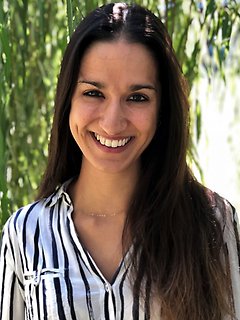
In my work as a Social Scientist at WWF I develop different types of evidence and knowledge to inform decision-making and adaptive management. I also work hard to bring a systems and resilience lens to the work we do!
Former student Shauna Majaha
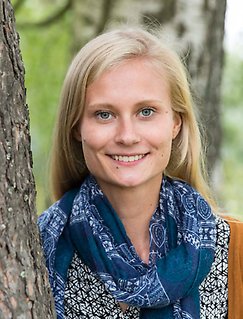
I am doing a PhD at the Natural Resources Institute in Finland. SERSD provided me with an excellent introduction to issues of sustainability science and transdisciplinary research. This inspired and encouraged me to pursue a PhD within similar topics.
Former student Viola Hakkarainen
Programme summary
Duration: 2 years full-time (daytime)
Degree: MSc in Social-Ecological Resilience for Sustainable Development
Language: English
Location: Stockholm, Sweden
Application deadline: please see www.universityadmissions.se
Begins: 1 September 2025
Apply for the programme here: www.universityadmissions.se
For information about the programme or the SRC, please contact :
Miriam Huitric
Master's programme director
Cornelia Ludwig
Education Coordinator
For information about your application, please contact:
Department for Biology Education
info.big@su.se
Study counsellor
Ann-Christin Lindås
ann.christin.lindas@su.se
Current classes
REFLECTIONS FROM FORMER STUDENTS
In my work as a Social Scientist at WWF, I develop different types of evidence and knowledge to inform decision-making and adaptive management. I also work hard to bring a systems and resilience lens to the work we do!
Shauna Mahajan
I am doing a PhD at the Natural Resources Institute in Finland. SERSD provided me with an excellent introduction to issues of sustainability science and transdisciplinary research. This inspired and encouraged me to pursue a PhD within similar topics.
Viola Hakkarainen