report launch
World Bank report highlights the need to embed the living planet at the core of decision-making and economic policy
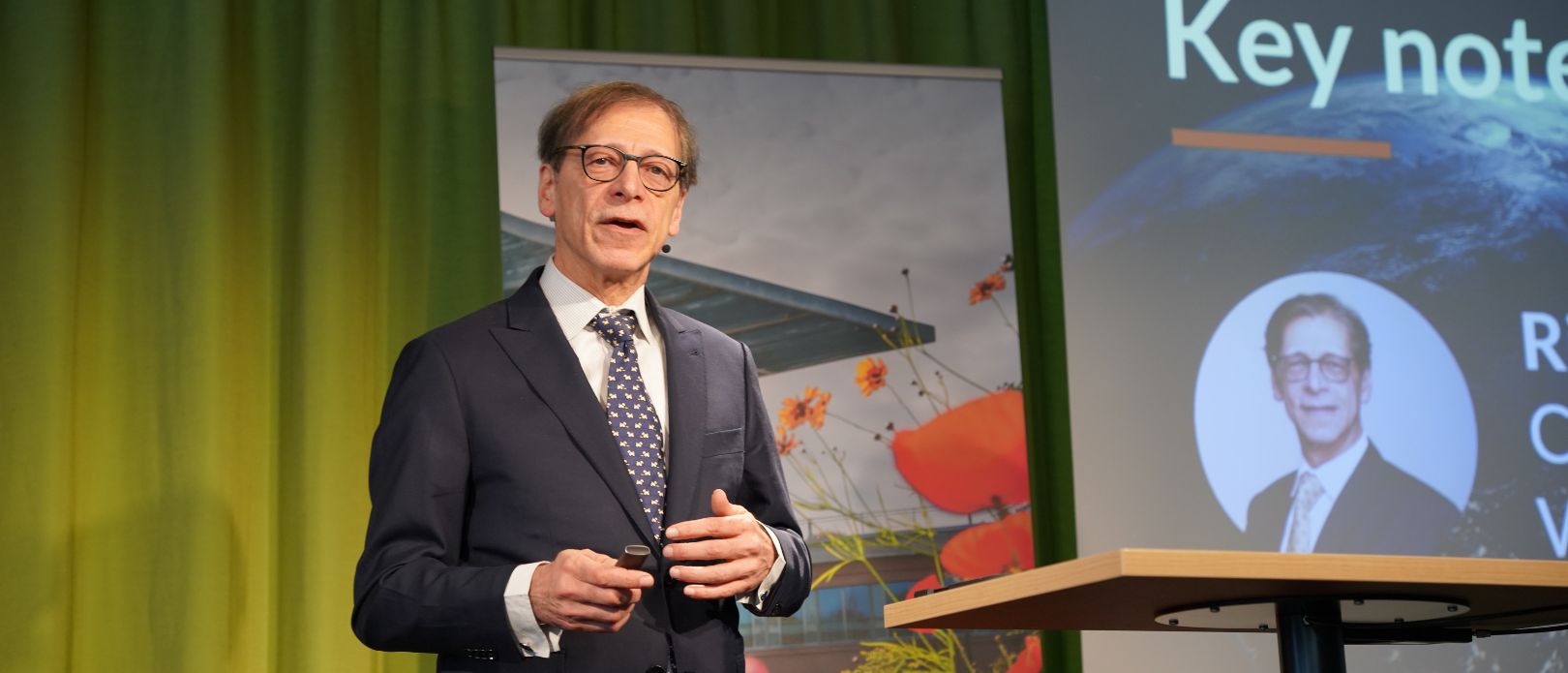
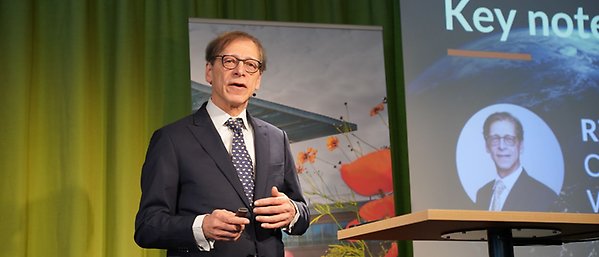
Richard Damania, Chief Economist of the Sustainable Development Practice Group at the World Bank, presents the new report Reboot Development: The Economics of a Livable Planet. Photo: Vaida Ražaitytė/SRC.
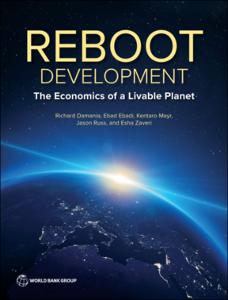
On 12 January 2026, the Centre hosted the Nordic launch of “Reboot Development: The Economics of a Liveable Planet”, the World Bank’s recent flagship report. It makes clear once and for all that investing in nature is not only good for the planet, it is smart development.
The report launch seminar brought together leading economists, sustainability scientists and policy experts to discuss how economic development can be aligned with the realities of a rapidly changing planet.
Introducing the report, lead author Richard Damania from the World Bank emphasized that environmental degradation is no longer a side issue to economic policy.
“These are not environmental problems – they are economic problems and development problems,” he said, noting that while global indicators of poverty reduction, access to electricity and infant mortality have improved dramatically, this progress has come “at a huge price on the environment”.
“Earth is not in a pretty state,” Damania added, referring to the Centre’s research on planetary boundaries while also pointing to data showing that only around five per cent of the planet’s mammal biomass now consists of wild animals.
Damania reiterated the report’s central message: the economy is embedded in nature, not external to it. From land-water interactions that impact rainfall patterns to the degradation of soils that influence food production and GDP, nature is already shaping economic outcomes. “It’s not something that will happen in the future – it’s happening now,” he said, while also stressing that cleaner, nature-positive investments create more jobs per dollar than polluting sectors.
Professor Carl Folke, founding director of the Centre and an advisor to the report, described it as signalling a deeper shift in thinking. “This report represents a cultural change in how we view our world,” he said. Despite today’s challenging geopolitical climate, Folke expressed cautious optimism: “The current political state may seem pretty hopeless, but things can go in the right direction if we bring the living planet into decision-making and work with it rather than against it.”
When the report was launched internationally in September last year, it was welcomed for reframing development discourse that treats environmental degradation as a manageable externality. However, critics cautioned against overreliance on green-growth strategies, arguing that these rest on the unlikely assumption that rapid decoupling sufficient to stay within planetary boundaries can occur under existing economic structures.
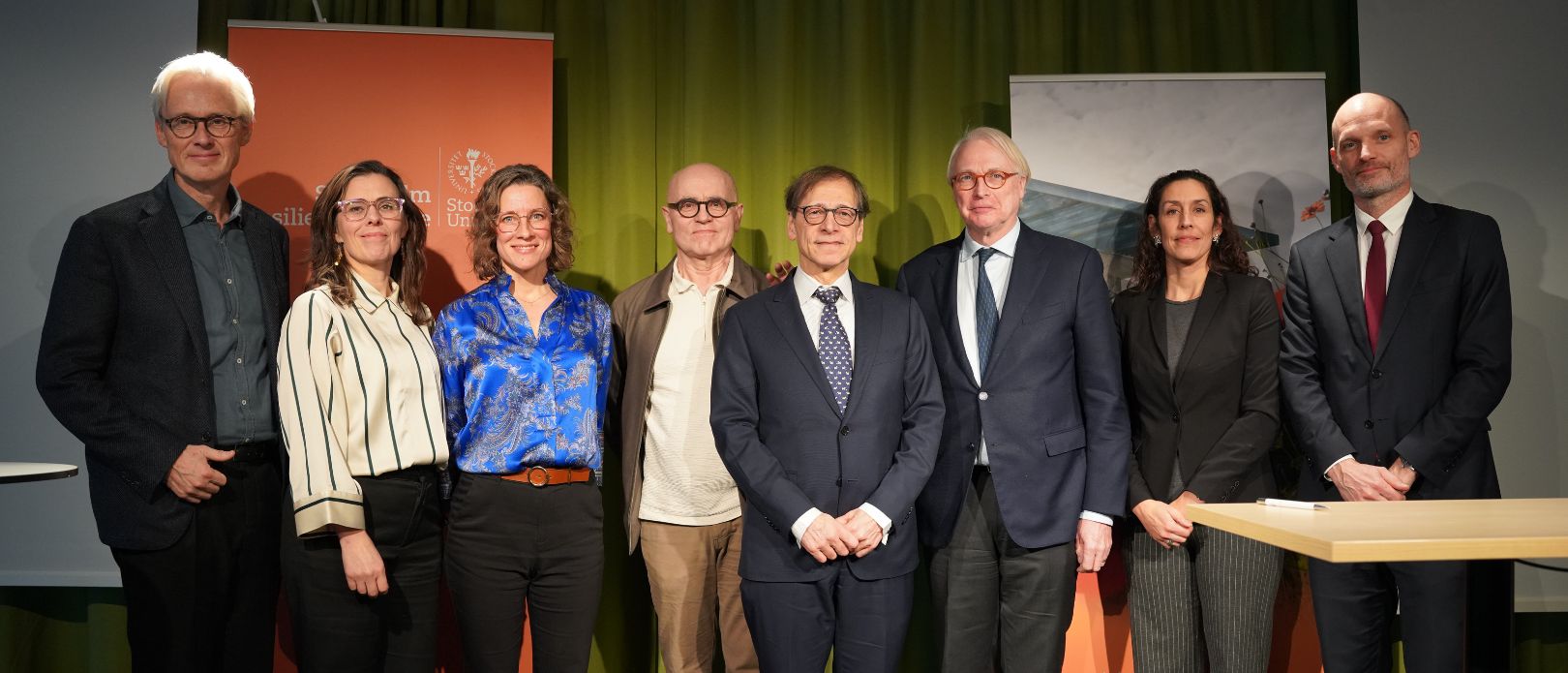
Speakers and panelists of the report launch event. From left to right: Måns Nilsson, Åsa Persson, Lisen Schultz, John Hassler, Richard Damania, Carl Folke, Beatrice Crona, Tobias Axerup. Photo: Vaida Ražaitytė/SRC.
The presentation was followed by panel discussions moderated by Lisen Schultz, Deputy Director of Stockholm Resilience Centre.
In the first panel, Åsa Persson, Researcher at KTH Climate Action Centre and Chair of the Swedish Climate Policy Council, said she appreciated that green competitiveness and jobs were highlighted in the report, not only the costs of climate and environmental policies. Persson also stressed that the main barriers to sustainable economic development are political rather than technical: “We don’t really need new measures or more alternatives to GDP. It has been done so many times before, this is not a supply problem, it’s about demand and politics.”
Beatrice Crona, Science Director at the Centre, praised the report’s clarity, while warning that decision-makers in both business and policy still lack crucial information. “We are flying blind when it comes to the absolute environmental effects of investments. Making invisible threats visible and clear is key.” Crona also pointed to gaps between ambition and practice, in particular when it comes to sustainability reporting, adding: “Intentions are in many ways good, but implementation and operationalization still fall short.”
Economist John Hassler, Professor at Stockholm University, welcomed the report’s focus on the relationship between growth and the environment. “More of everything is something we cannot continue with”, he said, while also claiming that all types of economic growth are not inherently bad – it can come from more services and become more efficient in its use of energy and resources. Hassler also challenged lingering assumptions in some policy circles, arguing that delaying the transition away from fossil fuels is economically beneficial. “That’s wrong,” he stated.
In a second panel, Måns Nilsson, Executive Director of the Stockholm Environment Institute, described the report as “a really refreshing focus.” He also emphasized the importance of systems thinking: “This kind of systems analysis with an economic lens is absolutely critical, and we don’t see it so often anymore among national governments – even though it’s needed more than ever to work across ministries.”
Representing the Swedish government’s engagement with the World Bank, Tobias Axerup from the Ministry for Foreign Affairs, welcomed the report’s timing. “We appreciate that the World Bank comes forward with this report,” he said. “Sweden is an owner and representative of the Bank, and this report gives us all strong arguments to focus more on a liveable planet in the continuous mandate of the World Bank.”
In his closing remarks, Richard Damania emphasised the importance of public trust and narratives. “We need trustworthy information and strong support from people. If all your news comes from social media, it becomes extremely difficult to get credible information,” he said.
The seminar underscored a shared conclusion among speakers: safeguarding nature is by no means a brake on development, it is a prerequisite for long-term prosperity.