Antarctic biodiversity
Voyage to the Weddell Sea: Establishing a baseline for one of Earth’s last pristine ecosystems
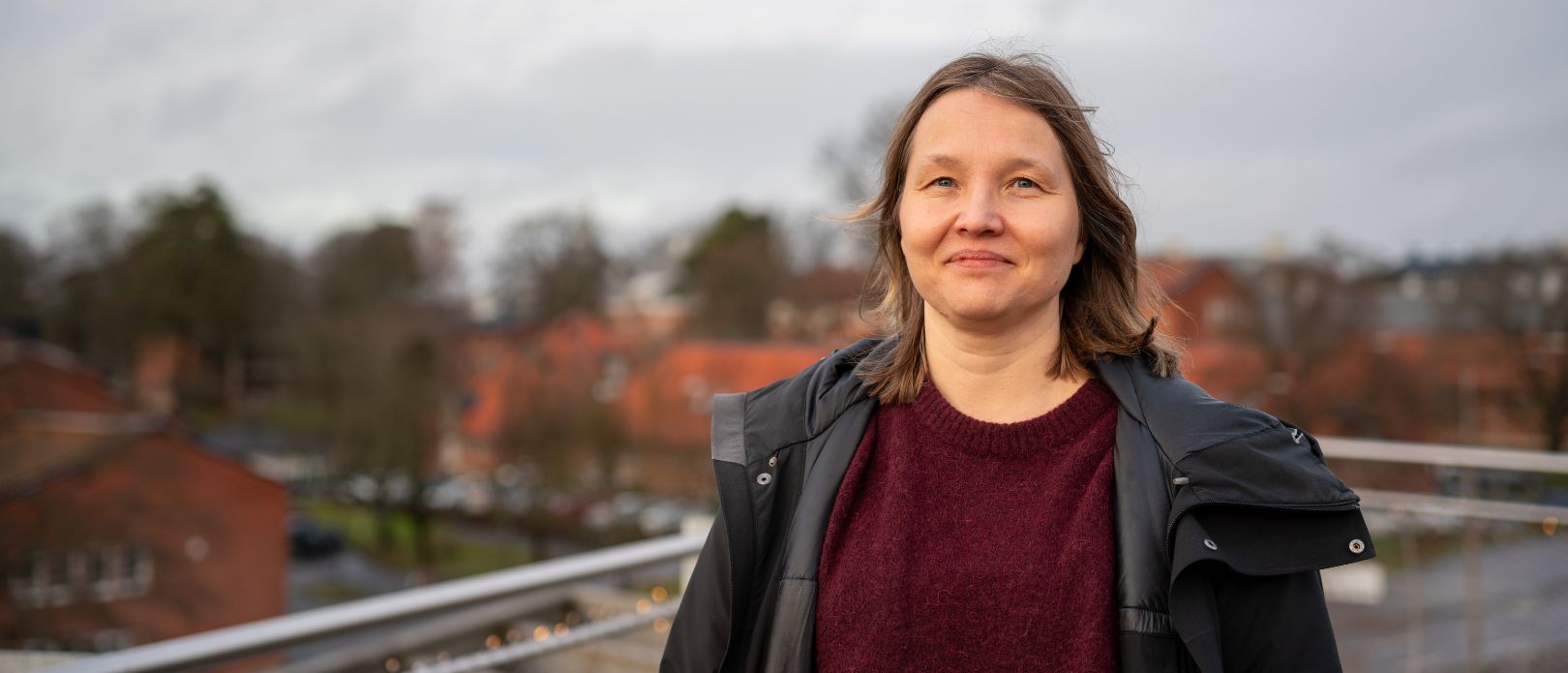
Susa Niiranen will spend seven weeks on the polar research vessel Polarstern. Photo: Johannes Ernstberger.
Centre researcher Susa Niiranen is setting sail for the Eastern Weddell Sea, Antarctica, joining a team of nearly 40 scientists on a major expedition to monitor one of the most remote marine ecosystems on the planet.
The expedition targets the Eastern Weddell Sea, a region that has so far remained largely insulated from the rapid climate change effects seen elsewhere in the Arctic and Antarctic. However, scientists know this window is closing.
"The idea is to establish a 'zero baseline' for monitoring biodiversity," explains Susa Niiranen. "We know the Arctic and the Antarctic are changing fast. In order to better understand this change, we need to start monitoring now before the major changes have taken place."
Creating a blueprint for the future
The expedition, which is lead by the University Rostock, involves heavy logistical support – including two helicopters – and covers a wide array of topics from ocean physics to marine mammals, the goal is to create a "blueprint" for an ecosystem monitoring network. This ensures that when future research projects receive funding to visit this extremely remote area, they can "hop on" to an existing framework, creating a consistent time series of data rather than isolated snapshots.
“I’m super excited! But I’m also wondering how it's going to be because I've never been on such a big expedition,” says Susa Niiranen.
Connecting science with stakeholders
Susa Niiranen’s role on board is unique. Rather than collecting water samples or tracking zooplankton, she will be observing the scientific process itself to study how it aligns with the needs of global and regional stakeholders as part of WOBEC (Weddell Sea Observatory for Ecosystem Change) project.
Funded via Biodiversa+, the project places a high value on stakeholder engagement. Prior to the cruise, the team held workshops with representatives from e.g. the fishing industry, tourism operators, and conservation NGOs including ASOC (Antarctic and Southern Ocean Coalition) that is also partnering in WOBEC.
"My role is to go on board and observe how this monitoring is done and interview researchers on how we could include stakeholders’ priorities and knowledge in the monitoring programme," says the researcher.
Policy in the pack ice
All data from this expedition will be made open access, and beyond immediate scientific inquiry it supports the development of effective protection strategies for a potential marine protected area (MPA) in the Weddell Sea.”
"What we create now – this monitoring and all the measurements we take – can be used as evidence for this kind of planning," Susa Niiranen notes, highlighting the connection between field science and international policy.
Funded by Biodiversa+
The expedition is part of the international research project Weddell Sea Observatory of Biodiversity and Ecosystem Change (WOBEC). It is funded via the European Biodiversity Partnership Biodiversa+ with the Swedish contribution coming from the Swedish National Space Agency.